Beginners don't need a complicated programme. They need to master five fundamental movement patterns: squat, hinge, push, pull, and carry. These movements train the whole body, translate to real life, and provide a foundation for everything more advanced. Learn them well and you'll have everything you need.
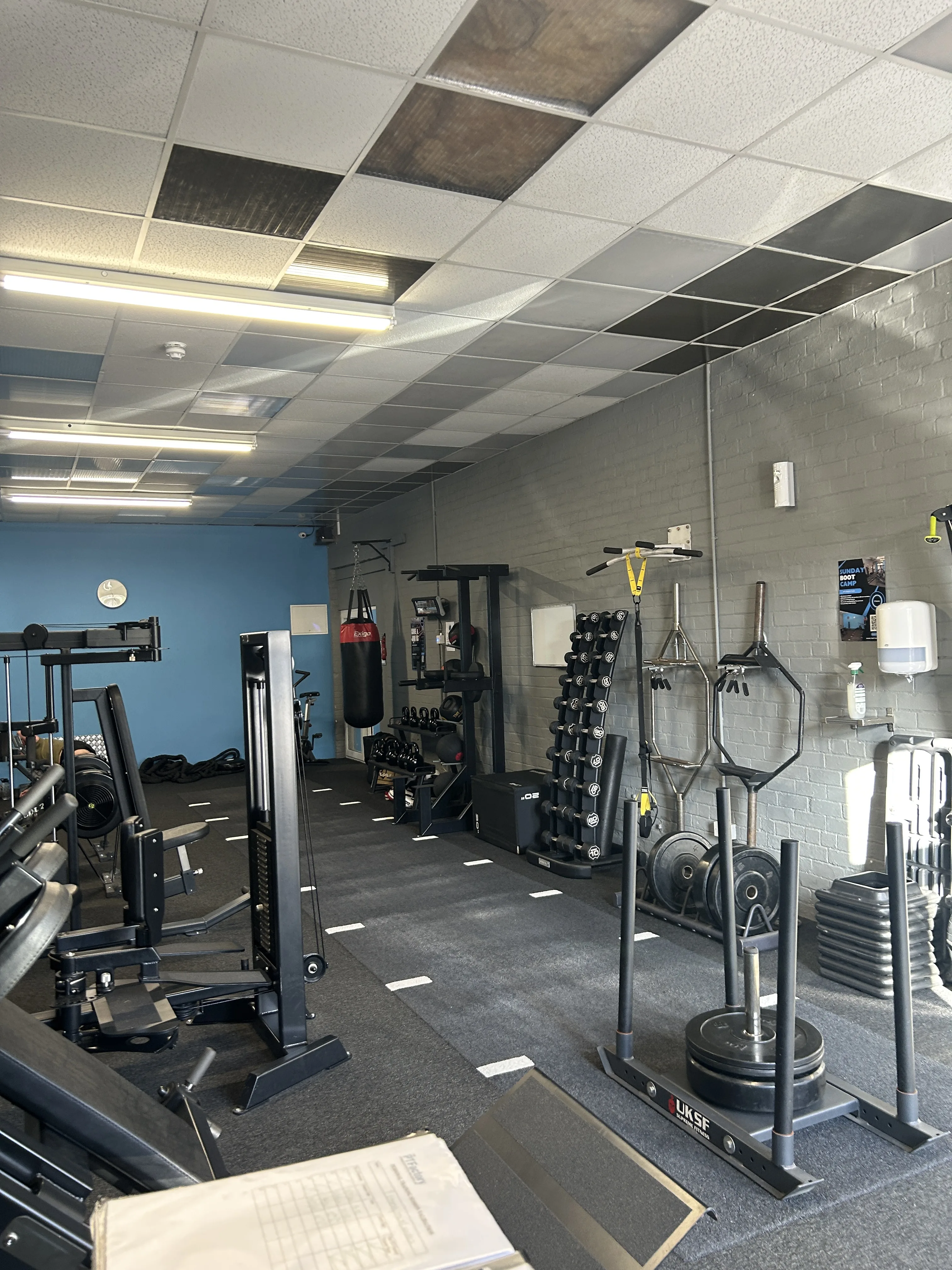
When someone walks into The PT Factory for their first session, I don't spend time explaining the finer points of periodisation or talking about VO2 max.
We learn to move well. And the movements we focus on are the same five I'd focus on with almost any beginner, regardless of their goal.
Not because these are the only exercises that exist - but because they're the ones that make the biggest difference, train the most muscle, and build a foundation for everything else. The fitness industry overcomplicates beginner training. I'm going to try to uncomplicate it.
The Five Movements
1. The Squat
Squatting is one of the most fundamental human movements - we do it naturally as children and most of us gradually lose the ability as adults. Rebuilding it strengthens the quads, hamstrings, glutes, and core simultaneously.
For beginners, start with a bodyweight squat or a goblet squat (holding a light dumbbell or kettlebell at chest height). Focus on sitting back and down, keeping your chest up, and driving through your heels to stand. Don't worry about depth initially - go as low as you can with good form and improve from there.
Progress to: barbell back squat, front squat, Bulgarian split squat.
2. The Hip Hinge
A hip hinge is a movement where the hinge comes from the hips rather than the lower back - the foundation of the deadlift and Romanian deadlift. It trains the entire posterior chain: glutes, hamstrings, and lower back.
Most people have never been taught to hinge properly, which is why back pain is so common. Learning to move through your hips rather than rounding your lower back is one of the most functional things I teach.
Start with: Romanian deadlift with a light barbell or dumbbells. Focus on pushing your hips back, keeping a flat back, and feeling the stretch in your hamstrings before driving forward through your hips.
Progress to: conventional deadlift, trap bar deadlift, single-leg variations.
3. The Push
A pushing movement works the chest, shoulders, and triceps. The most fundamental version is the press-up - no equipment required, and highly scalable from beginners who struggle to do one to advanced athletes doing weighted variations.
If press-ups are too hard initially, start on an incline - hands on a bench or wall. As you get stronger, lower the incline until you can do full press-ups. From there, add weight via a dumbbell or barbell bench press.
Progress to: bench press, overhead press, dips.
4. The Pull
A pulling movement works the back, biceps, and rear shoulders - the muscles that most desk workers are weakest in. Rowing and pulling movements also counteract the rounded-shoulder posture that comes from sitting at a computer all day.
Start with: dumbbell rows, cable rows, or lat pulldowns. If you want to eventually do pull-ups (a great goal), lat pulldowns and band-assisted pull-ups are the best way to build toward them.
Progress to: pull-ups, barbell rows, single-arm rows.
5. The Carry
Carries are underrated and almost never programmed for beginners. Walking with weight - a loaded bag, a dumbbell in each hand, a single heavy dumbbell - trains grip strength, core stability, and posture in a way that translates directly to everyday life.
Farmer carries (holding a dumbbell or kettlebell in each hand and walking) are simple, effective, and safe. Start light, focus on standing tall, and increase the weight over time.
How to Put It Together
A simple beginner programme might look like this:
Two or three sessions per week, full body each time. Each session includes one squat variation, one hinge variation, one push, one pull, and optionally a carry. Three to four sets of each, eight to twelve reps.
That's it. No complicated splits, no daily training, no two-hour sessions. Three 45-minute sessions per week built around these movements, progressing the load over time, will produce significant results for most beginners within eight to twelve weeks.
What Matters More Than the Exercises
Technique matters more than anything else at this stage. Doing a squat badly doesn't just risk injury - it means you're not training the muscles you're trying to train. Good form first, load second. Always.
This is why learning these movements with someone who can correct your technique is worth more than any programme you can find online. Online programmes can't see you. I can.
Want to learn these movements properly from the start?
Book a free consultation at The PT Factory in Denton. We'll have a chat, I'll show you around, and if you decide to start, we build your programme around exactly what you need.
Book your free consultation