Starting exercise over 50 is completely achievable - and more important than at any other stage of life. The key is starting where you actually are, not where you think you should be. Focus on strength, mobility, and consistency. Find a supportive environment. And ignore anyone who tells you it's too late.
One of my clients couldn't get himself up off the floor when he first came to see me.
Not because of an injury. Just because years of reduced activity had taken him to a point where that basic thing - getting up from the floor - was genuinely beyond him. He was embarrassed. He thought he'd left it too long. He almost didn't come at all.
A few months later, he was doing push-ups. Weighted squats. Getting off the floor with no help, no problem.
I think about him every time someone tells me they're too old to start.
Nobody is too old to start. But how you start over 50 is different from how you'd start at 25 - and most fitness advice doesn't acknowledge that.
Why Exercise Matters More After 50
From around your mid-thirties, the body starts to lose muscle mass - roughly 3 to 5 percent per decade if you don't do anything to prevent it. After 50, this accelerates. So does the loss of bone density, balance, and flexibility.
The result, if left unchecked, is the kind of gradual physical decline that most people assume is just "getting older." Feeling stiff in the morning. Finding it harder to do things you used to do without thinking. Losing confidence in your body.
Here's the important part: most of this is reversible. Or at least stoppable. Exercise - particularly strength training - is the single most effective thing you can do to slow this process down. The research on this is overwhelming and consistent.
You can't undo the years. But you can change what the next ones look like.
What's Actually Different About Exercising Over 50
A few things genuinely are different, and they're worth knowing.
Recovery takes longer
Your body needs more time to recover between sessions than it did at 25. Two or three sessions a week, done consistently, will produce better results than five sessions that leave you exhausted and sore. More is not always better - appropriate is better.
Mobility matters more
Stiffness, joint pain, and limited range of movement are common over 50 - but they're not inevitable. Regular mobility work (stretching, controlled movement through a full range) makes a significant difference to how your body feels day to day. I incorporate this into every session I run with older clients.
Strength training is essential, not optional
A lot of people over 50 default to walking or gentle cardio and avoid weights entirely. Walking is great. But without some form of resistance training, you're not addressing the muscle loss that's happening in the background. You don't need to lift heavy. Bodyweight exercises, resistance bands, or light weights done consistently will do the job.
Your starting point is your starting point
This is the one I emphasise most. Whatever shape you're in right now - that's where we start. Not where you were at 40. Not where someone else your age is. Right now, as you are today.
I hold a chair-based exercise qualification specifically because some of my clients can't do traditional standing exercises when they first come to me. That's fine. We start there. We build from there. The progress is always real, regardless of the starting point.
Where to Begin: A Practical Starting Point
1. Get checked out first
If you have any existing conditions - heart issues, joint problems, diabetes, osteoporosis - have a chat with your GP before starting a new exercise programme. This isn't to talk you out of it. It's so you can do it safely and with confidence.
2. Start with two sessions a week
Not five. Not even three. Two, done consistently for a month, is a better foundation than five sessions a week that you abandon after a fortnight.
Two sessions a week gives your body time to recover, builds the habit gradually, and fits around a real life with real commitments. Once two sessions a week feels normal, adding a third is easy.
3. Focus on the basics
You don't need a complicated programme. The movements that matter most are the ones your body uses in everyday life: sitting and standing (squats), picking things up (deadlifts), pushing and pulling (pressing, rowing), and walking. Get reasonably good at those and you'll notice a difference in daily life within weeks.
4. Expect to feel it - but not destroyed
Some muscle soreness after the first few sessions is normal. Feeling absolutely wrecked for three days is not. If a session leaves you unable to function normally the next day, it was too hard. Good exercise should challenge you and leave you feeling slightly tired - not broken.
5. Find the right environment
This is probably the most underrated factor. A big commercial gym full of 25-year-olds is not the right environment for most people starting exercise over 50. It's intimidating, the equipment is often set up for a different body, and there's usually nobody around to help.
A smaller gym with a trainer who understands older adults is a completely different experience. The right environment makes everything easier - getting through the door, staying consistent, and actually enjoying it.
Common Worries (And Honest Answers)
"I'm worried I'll hurt myself." A good trainer will make sure you don't. Every exercise I use with older clients is appropriate to their ability and progressed gradually. The risk of injury from appropriate exercise is low. The risk of doing nothing - to your strength, balance, bone density, and overall health - is much higher.
"I'm embarrassed about how unfit I am." Everyone starts somewhere. The clients I work with range from people who haven't exercised in decades to people who were active but have had a setback. I've genuinely seen everything. There is no starting point that would make me think less of you.
"I'm too stiff / my joints are too bad." Joint pain and stiffness are often improved by the right kind of exercise, not made worse. Moving more - carefully, in the right way - usually helps. Complete rest often doesn't.
"I've left it too long." See the client at the start of this article.
What to Do Next
If you're based in or near Manchester and want to start exercising over 50, I'd love to have a chat.
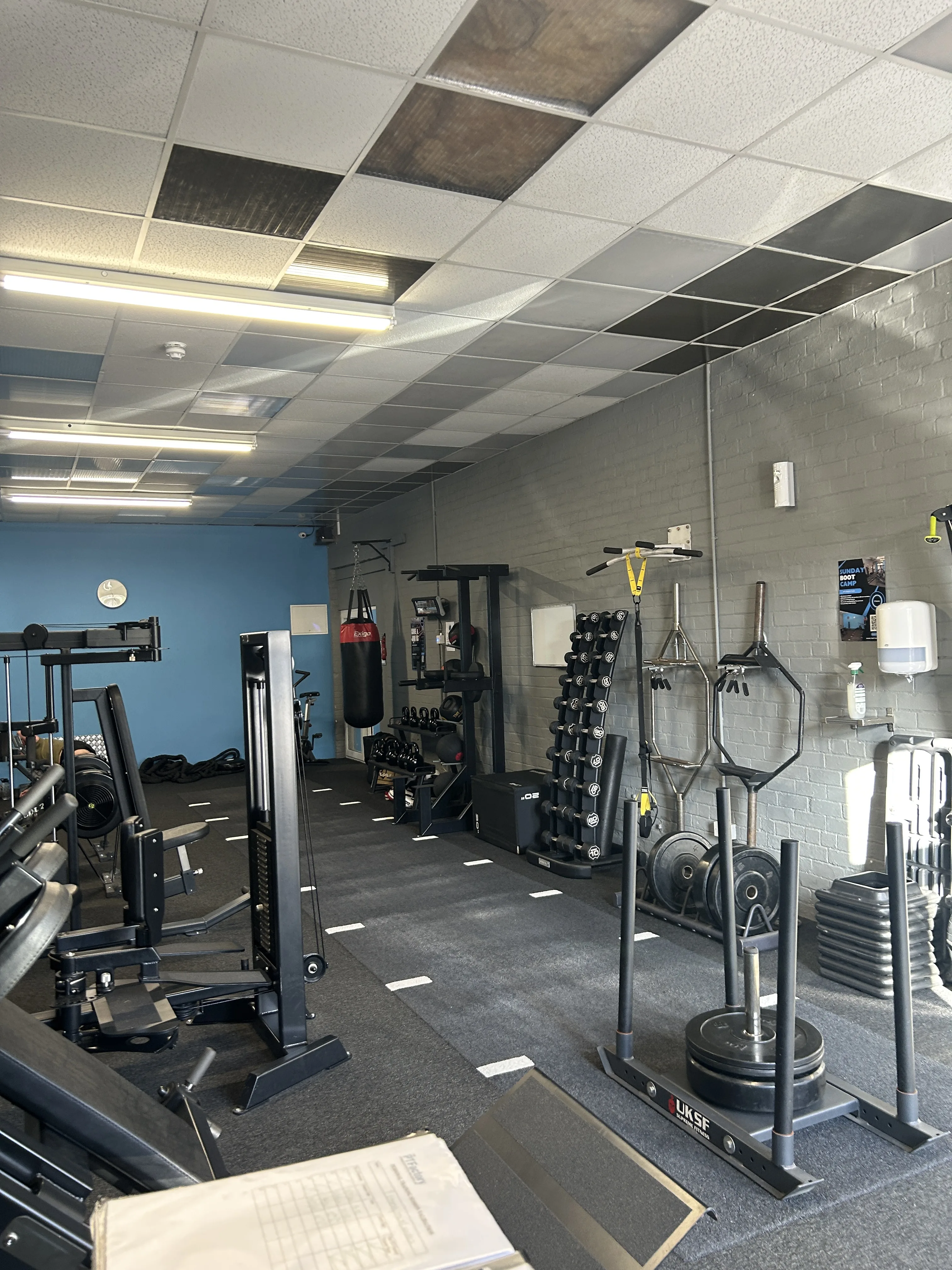
I offer free consultations at The PT Factory in Denton. No exercise involved - just a look around the gym, a conversation about where you are and what you want, and an honest answer about whether working together makes sense.
Most people walk out saying it wasn't what they expected - usually because it was much less scary than they'd imagined.
Ready to start?
Book a free consultation at The PT Factory, Denton. No exercise, no pressure - just a conversation about what you want and how to get there.
Book your free consultation