Gym anxiety is the fear, dread, or self-consciousness that stops people from going to - or staying in - the gym. It's extremely common and it's not a character flaw. The gym environment itself is often the problem, not you. The most effective way to overcome it is gradual exposure in the right environment, ideally with a familiar face.
One of my clients - a woman in her 30s - told me something I'll never forget.
She said she used to stop outside the gym before sessions and cry. Not because anything bad had happened. Just because the thought of walking through that door was so overwhelming that her body started preparing to flee before she'd even got out of the car.
Today, she beats me through the door.
That's not a small thing. That's a complete shift in how she feels about herself, her body, and what she's capable of.
If you've ever felt that pull to turn back - if you've driven to the gym and gone home without going in, or talked yourself out of signing up, or stood outside a gym and felt your heart rate spike before you'd even touched the door handle - this article is for you.
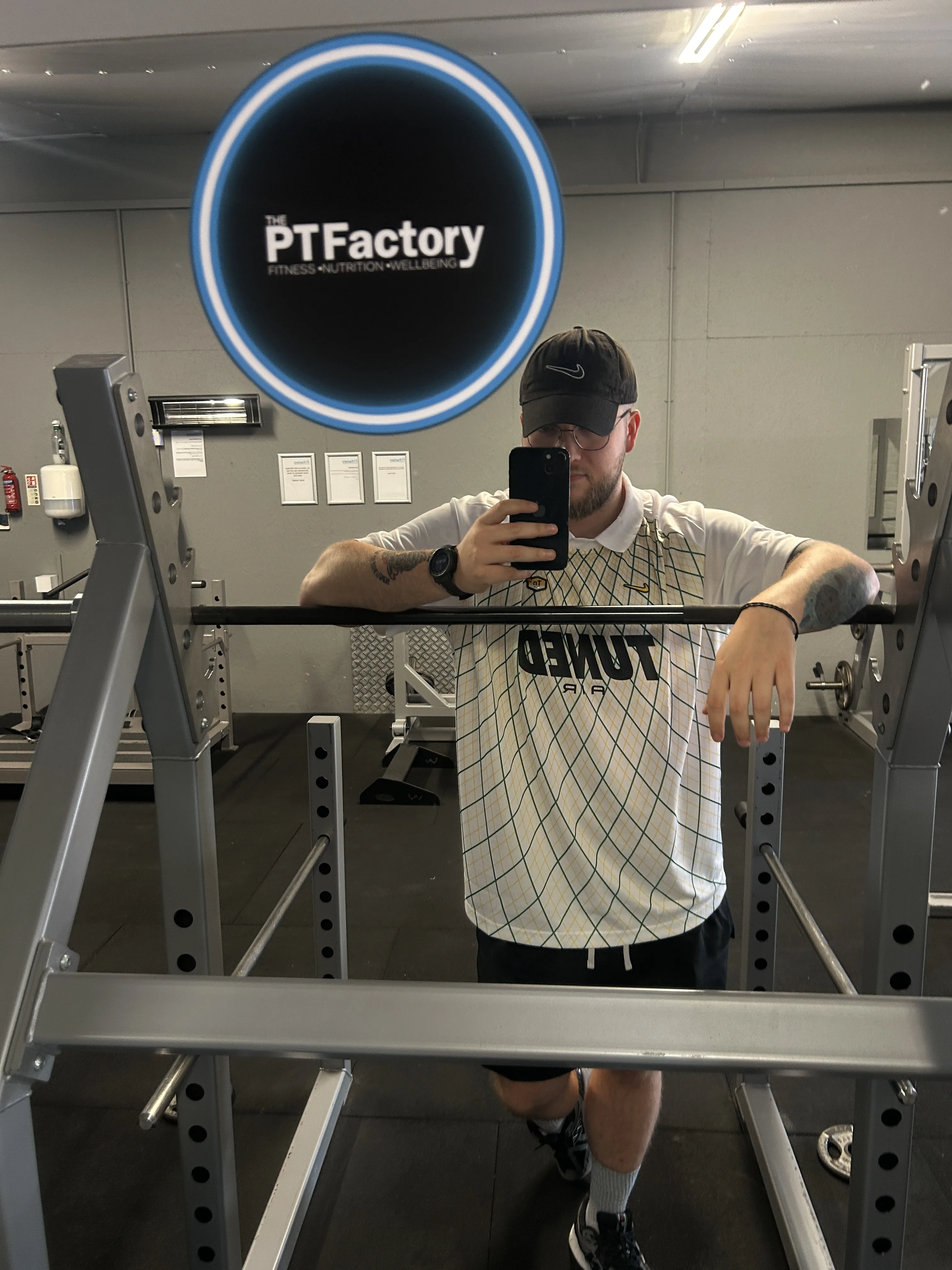
I'm Kallum, a personal trainer based in Denton, Manchester. Before I was a PT, I was a police officer. And before I figured out how to make fitness work for me, I was exactly the person I just described.
Let's talk about gym anxiety - what it actually is, why it happens, and how to genuinely get past it.
What Is Gym Anxiety?
Gym anxiety is the fear, dread, or self-consciousness that makes going to the gym feel harder than it should be.
It shows up differently for different people. For some, it's the thought of being judged - for how they look, how much they lift, or how little they know. For others, it's the feeling of not belonging, like everyone else is in on something you're not. For others still, it's just a general sense of being out of place in an environment that wasn't designed with them in mind.
It's one of the most common things I encounter as a PT. Roughly half of gym-goers report feeling intimidated or anxious in the gym environment at some point. And in my experience, the people who feel it most are often the people who need exercise the most - not because they're weak, but because the gap between where they are and where they think they "should" be feels enormous.
Here's the thing nobody says out loud: that gap is often an illusion created by the gym environment itself.
Why the Gym Makes It Worse (It's Not You)
Here's something the fitness industry doesn't want to admit.
Most commercial gyms are designed by people who already love the gym, for people who already love the gym.
The layout. The mirrors everywhere. The equipment that looks complicated. The people who seem to know exactly what they're doing. The unspoken rules nobody tells you. The loud music. The body-focused advertising on every wall.
All of it assumes you already feel comfortable. All of it skips the part where you're a normal person who just wants to move more and feel better, standing in a room that feels like it belongs to someone else.
I left the police force at the end of 2022. I'd put on weight. My mental health was in a bad place. I joined a big commercial gym, got the right trainers, did everything you're supposed to do.
Three weeks later I stopped going.
Not because I was lazy. Because every session felt like walking into a room where I was the only one without the manual.
That experience is what eventually led me to become a PT. Because I knew there had to be a better way - and I wanted to be the person for other people that nobody was for me.
Signs You Might Have Gym Anxiety
Gym anxiety doesn't always look the way you'd expect. See if any of these sound familiar:
- You've joined a gym but rarely - or never - actually gone
- You time your visits to avoid busy periods, then feel guilty for going when it's quiet
- You stick to the same piece of equipment every time because everything else feels too complicated
- You avoid free weights or certain areas of the gym because they feel like "not for you"
- You've thought "I need to get fitter before I go to the gym" (yes, this one's very common)
- You feel like everyone is watching you, even though logically you know they're not
- You've driven to the gym and turned back without going in
If two or more of those felt familiar - you're dealing with gym anxiety. And you're in good company.
How to Actually Overcome Gym Anxiety (What Works)
Most advice on this topic is vague. "Just go!" "Confidence comes with time!" "Nobody's looking at you!"
Technically true. Not remotely helpful.
Here's what actually works, in order.
1. Visit the Gym Without the Pressure of Working Out
The fear of the unknown is a huge driver of gym anxiety. If you've never set foot in a particular gym - or haven't been in years - your brain fills the unknown with worst-case scenarios.
The fix is simple: go and have a look around before you commit to doing anything.
Most gyms will let you come in for a tour. Walk around. See where everything is. See what the changing rooms look like. Notice that the people there are mostly just ordinary humans doing ordinary things. Your brain will stop catastrophising once it has actual information to work with.
At The PT Factory in Denton, this is exactly what my free consultations are. No exercise. No commitment. Just a walk around the gym and a conversation about what you want to achieve. The number of people who come in terrified and leave relieved is something I see every week.
If you're not ready to walk into a gym yet, start here instead. Five short emails from someone who's been there.
Get the free guide →2. Find a Smaller, Less Intimidating Environment
Big commercial gyms are not the only option.
Smaller, independent gyms tend to have a completely different atmosphere. There's usually a more familiar community, staff who know your name, and far less of the "everyone's a pro athlete" energy that big chains can create.
If you've been put off by one type of gym, it doesn't mean all gyms are like that. The environment matters enormously.
3. Have a Plan Before You Walk In
One of the biggest contributors to gym anxiety is not knowing what to do when you get there.
If you walk in without a plan, you'll either wander around looking lost (which feels awful) or gravitate to the one machine you recognise and do that for 20 minutes (which gets boring fast).
Even a basic plan helps. Three exercises. That's it. Know what you're going to do before you arrive and the anxiety of "what do I do now?" disappears.
4. Go at Quieter Times
If gym anxiety is partly about being watched, reducing the number of people around helps.
Most gyms have quieter periods - typically mid-morning on weekdays (9am–12pm) and mid-afternoon (2pm–4pm). Evenings and weekend mornings tend to be the busiest.
Ask the gym when their quietest times are. Go then. As your confidence builds, the busy times will feel less overwhelming.
5. Bring Someone - or Find a Friendly Face
Everything is easier with a familiar person next to you.
If you have a friend, partner, or family member who'd go with you, bring them. The social dynamic shifts everything - you're no longer a person alone in an unfamiliar room, you're two people doing something together.
If you don't have someone to bring, a personal trainer serves the same function. You walk in knowing there's someone who's expecting you, who knows your name, who's glad you came. That single change removes most of the anxiety for most people almost immediately.
6. Reframe What You're There to Do
Most gym anxiety is rooted in the idea that you're being assessed. That people are watching you, comparing you, judging whether you belong.
The reframe that helps most of my clients: you're not at the gym to impress anyone. You're there for yourself. For your health, your energy, your mood, your future.
The person on the treadmill next to you is not thinking about you. They're thinking about their own workout, their own day, their own stuff. Nobody's keeping score.
What My Clients Say About Their First Sessions
I'll let them tell it in their own words.
"If you're unsure about PT and nervous about going to the gym, sign up with Kallum. He's helped transform me."- Zak James, trained 8 months
"He's extremely relaxed and I actually enjoy it, which I didn't think I would as I've never been to a gym before."- Brian Riding, first-time gym-goer
"I was very nervous being an older client. Kallum is extremely welcoming and makes the workouts fun, but knows your abilities well enough to push you."- Jacqueline Orson
"Like myself, not going to the gym gives me anxiety - but for that one hour out of my comfort zone, Kallum makes you feel comfortable."- Chris Blenkinsop
The pattern is the same every time. Nervous going in. Surprised coming out. Back the following week.
Key Takeaways
- Gym anxiety is common - roughly half of gym-goers feel it to some degree
- It's not a character flaw - the gym environment itself is often the problem
- Visiting without pressure to work out helps enormously
- A familiar face removes most anxiety almost immediately
- Having a plan before you walk in eliminates the "what do I do now?" panic
- Going at quieter times reduces the feeling of being watched
- The goal isn't to feel confident before you start - it's to start before you feel confident
Frequently Asked Questions About Gym Anxiety
Yes. Gym anxiety - sometimes called gym intimidation or "gymtimidation" - is a genuine psychological response to an unfamiliar or threatening environment. It's extremely common, particularly among new gym-goers, people returning after a break, and those who feel self-conscious about their fitness level or appearance. It's not weakness and it's not unusual.
Most gym environments are designed in ways that inadvertently increase self-consciousness - mirrors everywhere, open floor plans where everyone can see everyone else, and a culture that implicitly rewards those who already look fit. If you feel self-conscious, it's a reasonable response to the environment, not a reflection of who you are.
It varies. For most people, anxiety decreases significantly after 3–5 visits to the same gym, once familiarity sets in. The key is making those first visits as low-pressure as possible - which is why tours, quiet times, and having a trainer help so much.
This is one of the most common things I hear - and it's exactly the wrong way to think about it. You don't need to be in shape to start. You start, and then you get in shape. Any gym worth going to is built for people at all fitness levels.
Yes, significantly. Having a familiar face who expects you, knows your name, and has a plan ready removes the majority of anxiety triggers in one go. You're no longer walking into an unknown room - you're showing up to meet someone who's glad you came.
Ready to Take the First Step?
If you've read this far and you're still not sure where to begin - I made something for you.
It's a free 5-day email series called "5 Days to Not Hating the Gym." Five short emails, one each morning, from me. My story, what I've learned, and what the people I work with have found actually helps.
No gym visit required to start. No commitment. Just five honest emails from a Manchester PT who's been exactly where you are.
And if you're in or around Manchester and want to see The PT Factory in Denton for yourself - the consultation is free, there's no exercise involved, and I'll be buzzing to meet you.
Kallum
Personal Trainer, The PT Factory, Denton, Manchester